What Are the Parts of a Pontoon Boat?
Thinking about getting a pontoon boat for your next adventure on the water? These kinds of boats can be delightful, especially if you want to spend time with friends or family members.
With expansive decks and a stable design, pontoon boats are ideal for groups of people to enjoy sunny days together
The parts of a pontoon boat include unique structural components and systems. If you're interested in learning to drive a boat, being able to name boat parts and understand what they do is essential—especially during emergencies. Here's what you should know about pontoon boats and their parts.
What Are the Parts of a Pontoon Boat?
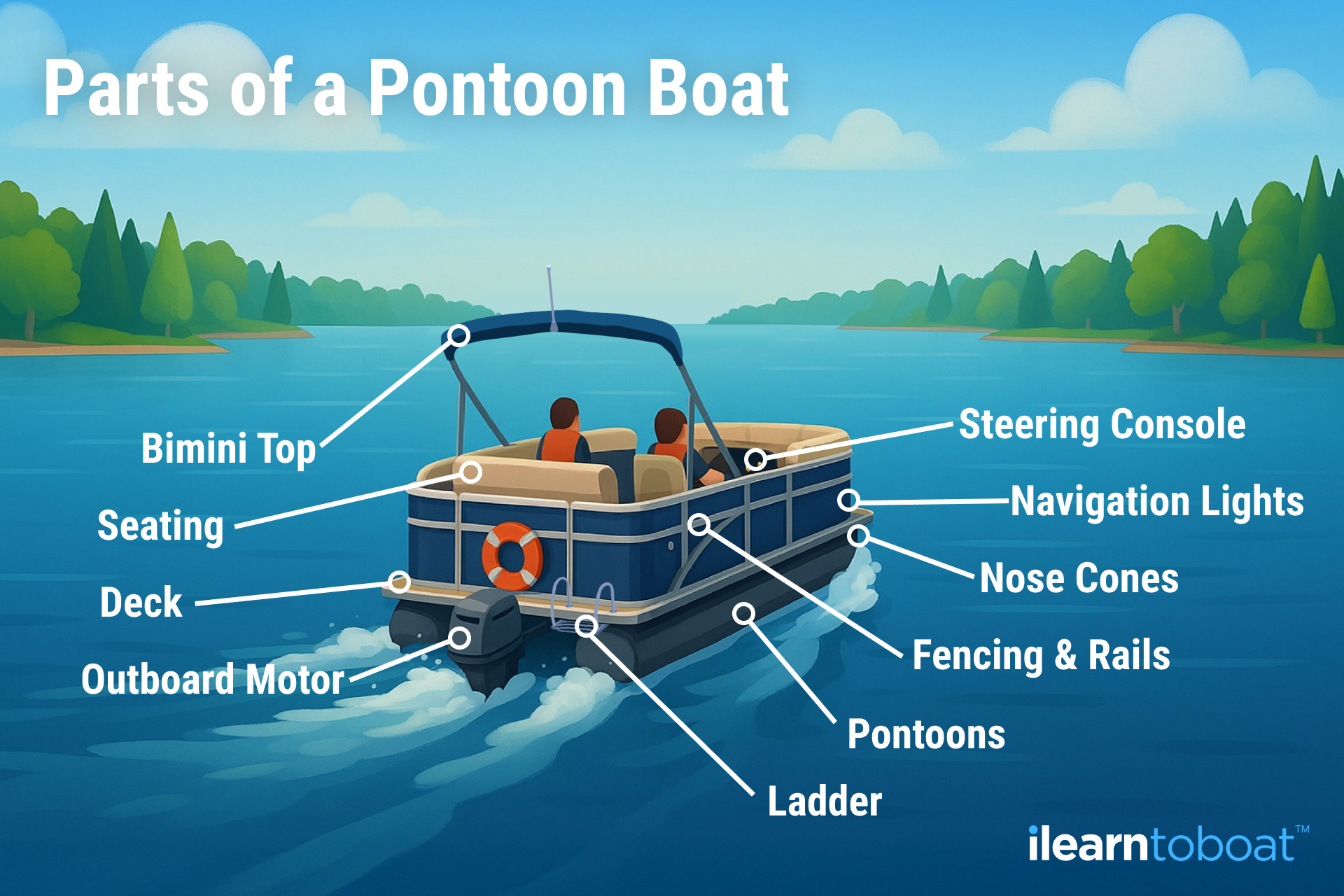
A diagram with the labeled parts of a pontoon boat can help you memorize vital details about your boat. Once you learn that information, you'll be able to drive a pontoon boat more confidently.
Structural Components
The first thing to know about a pontoon boat is that it has specific structural components. Some parts of your boat will be similar to other vessels, but some are unique to this kind of boat.
- Pontoons (Tubes or Logs): These are the large, hollow, cylindrical tubes that give your boat its buoyancy and stability, which allows it to float. Pontoons are typically made of aluminum.
- Nose Cones: These are the leading, pointed ends of the pontoons. Nose cones are designed to cut through the water and sometimes feature splash fins.
- Substructure: This framework, including any cross members (joists) and brackets, supports your vessel's deck and connects it to the pontoons.
- Underskin: The underskin is a flat covering on the underside of your boat. It's there to protect the substructure and improve vessel performance.
- Deck: A flat surface for activities and boat furniture, the deck is typically made from marine-grade plywood or composite material.
- Transom: The transom is a thick panel at the back (stern) of the boat. It's where the engine is mounted and supported.
Though there are other parts of a pontoon boat, these are the main areas to identify before heading out on the water.
Onboard Features and Systems
Pontoon boat operators should be able to recognize specific onboard systems and features, as well as the vessel's main components.
- Fencing and Rails: These are the panels and framework surrounding the deck. They provide safety and security for your passengers, preventing them from falling overboard.
- Gates: These swinging doors in the fencing are for entering and exiting the boat, typically at the bow and on the starboard side.
- Motor System: Your pontoon boat has an outboard engine (or engines) and a propeller.
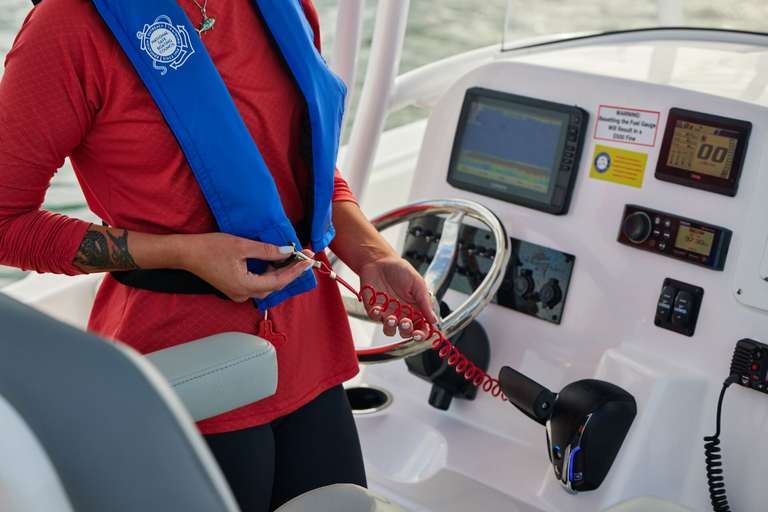
- Steering Console (Helm): This is the central control station for the captain, housing the steering wheel, throttle, gauges, and other electronics.
- Seating and Furniture: Seating is a defining feature of pontoon boats, and it may include bench seats, loungers, and captain's chairs.
- Bimini Top: This collapsible canvas or composite top provides shade and sun protection.
- Ladder: A ladder is an essential safety feature, and it's typically mounted at the stern to allow you and your passengers easy access to the water.
- Navigation Lights: Navigation lighting is essential for safe nighttime or low-visibility conditions, and should include red (port) and green (starboard) lights.
- Cleats: Use these sturdy metal fittings on the deck to tie your pontoon boat to docks or buoys with ropes.
Before you head out onto the water, check your pontoon boat's features and systems to ensure they're working correctly.

How Does a Pontoon Boat Work?
A pontoon boat displaces water to create lift and stability, which helps the vessel float. The wide stance of the pontoons provides exceptional balance, keeping the boat from tipping over.
Pontoon boats typically have one or more outboard motors that provide forward propulsion, and you can steer them using a throttle and helm controls. They have a flat-deck design that evenly distributes the weight of passengers and gear, improving handling and increasing comfort.
What Are the Features of a Pontoon Boat?
One of the main features of a pontoon boat is stability and a smooth ride, making it ideal for families, leisure cruising, and fishing. These boats also feature a spacious layout, open decks, ample seating, and plenty of storage.
They're highly customizable, so you can look at the parts of a pontoon boat and plan where you want to add fishing gear, watersports equipment, premium sound systems, and more. Their versatility makes them a good choice for lakes and rivers, as well as calm coastal waters, and they provide plenty of comfort with plush seating, tables, and shade.
Do I Need a License to Operate a Pontoon Boat?
Requirements for driving a pontoon boat vary by state or country, and many regions require operators to hold a boater safety certificate or safety card. There are also usually age restrictions for operating motorized vessels; always check your local boating laws before launching.
How to Stay Safe on a Pontoon Boat
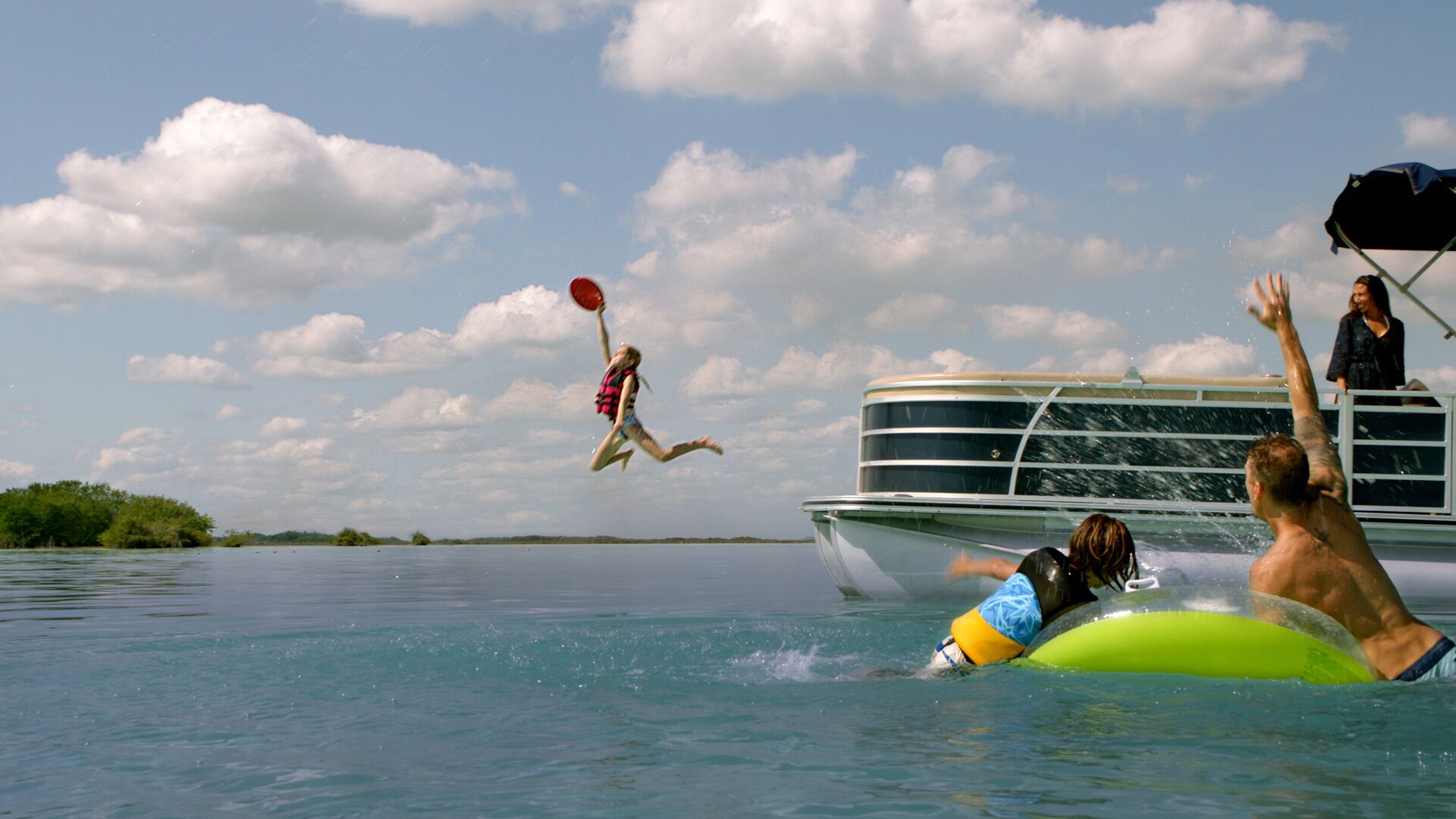
The best way to stay safe on a pontoon boat is to wear your life jacket and ensure that Coast Guard–approved safety gear is onboard.
In addition, operators should maintain proper weight distribution to keep the boat stable, follow posted speed limits and no-wake zone rules, and avoid boating under the influence of alcohol or drugs. Keep an eye on weather conditions, and take your boat back to shore if storms are approaching.
If you're heading out in the evening or at any time when visibility is low, ensure your navigation lights function properly, and don't forget to perform regular maintenance checks on your boat's engine, battery, and safety equipment. Keeping a list or chart with the labeled parts of a pontoon boat can help you remember to check them before boating.
Learn How to Stay Safe on a Pontoon Boat with a Boater Education Course
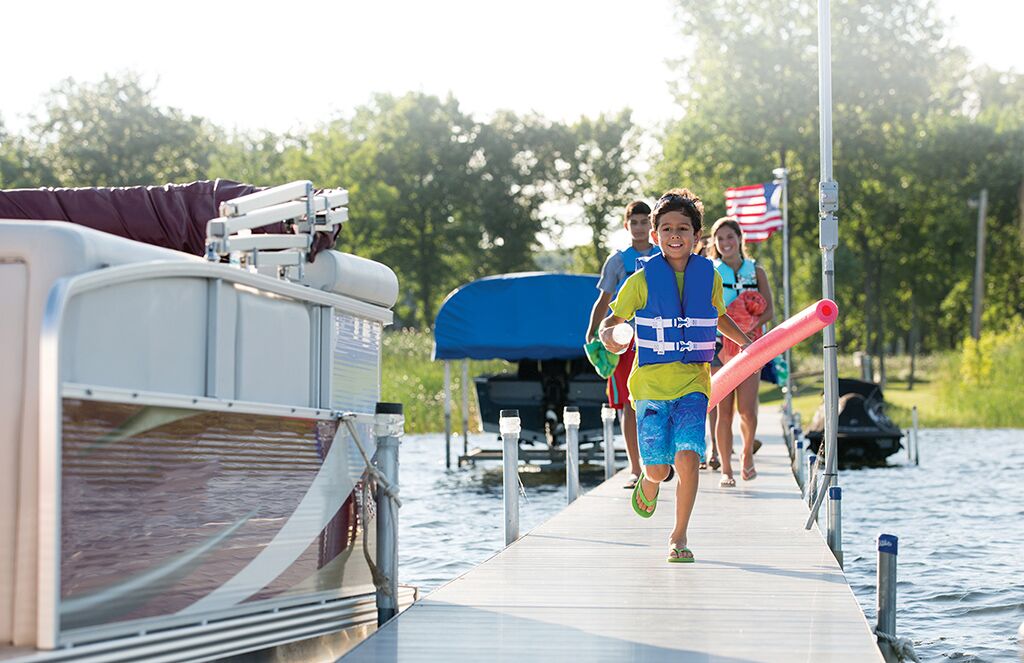
Pontoon boats are fun for all ages! Learn the parts of a pontoon boat and understand how it works to stay safe when spending a day on the water with family and friends.
Along with the basic safety tips to protect yourself while boating, make sure you take a boater education course to learn more about safety, navigation, etiquette, and handling emergencies on the water. Cultivating this knowledge can reduce your risk of an accident and improve your experience on a pontoon boat.
Plus, most states require boat operators to have a boater safety certification before getting behind the helm. This includes driving a pontoon boat!
Enjoy your pontoon boat safely and legally this season.

Frequently Asked Questions (FAQs)
We have answers to questions about the parts of a pontoon boat!
Q: What are the parts of a pontoon called?
A: The main parts of a pontoon boat are the pontoons (tubes), deck, cross members, fencing/rails, helm (console), seating, engine (outboard), and boarding ladder.
Q: What are the features of a pontoon boat?
A: Pontoon boats feature multiple pontoons for stability, a flat deck, open seating layouts, railings, an outboard motor, storage compartments, and often amenities like sun pads, tables, Bimini tops, and sound systems.
Q: What is each part of a boat called?
A: Common boat parts include the bow (front), stern (rear), port (left), starboard (right), hull, deck, helm, engine, transom, cleats, and railings.
Q: What do you call the tubes on a pontoon boat?
A: The tubes on a pontoon boat are called pontoons or pontoon tubes (also sometimes logs).