Boat Signs on the Water: A Guide to Buoys and Markers
Good navigation skills are critical to protecting yourself and others who share the waterways.
When navigating a boat, buoys and markers are essential for gathering information. They help maintain safe boating practices, indicate hazards like shallow water areas, and guide boaters through channels and other tight spots. Learning how to read boat signs on the water is an important skill to have before your next adventure.
Here's what to know about boat signs and what they mean for your travels.
What Are Waterway Buoys and Markers?
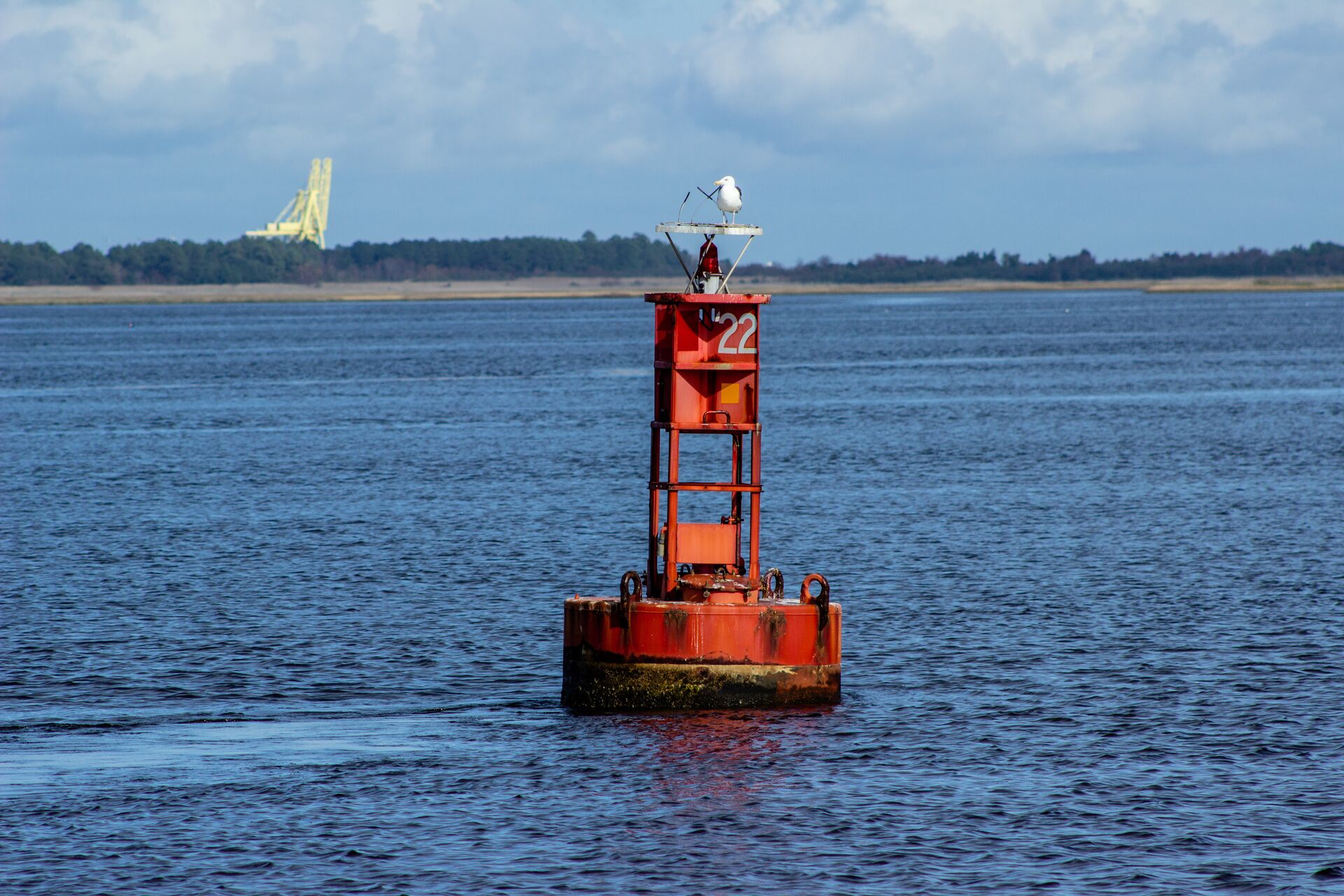
Buoys and channel markers help boaters understand the conditions in the area, including water depth, potential hazards, and travel boundaries. If you're unsure what a marker means, it could lead to a collision, grounding your boat, or other safety risks.
Even if you're familiar with your local waters, paying attention to markers, buoys, and any changes to them is crucial to boating.
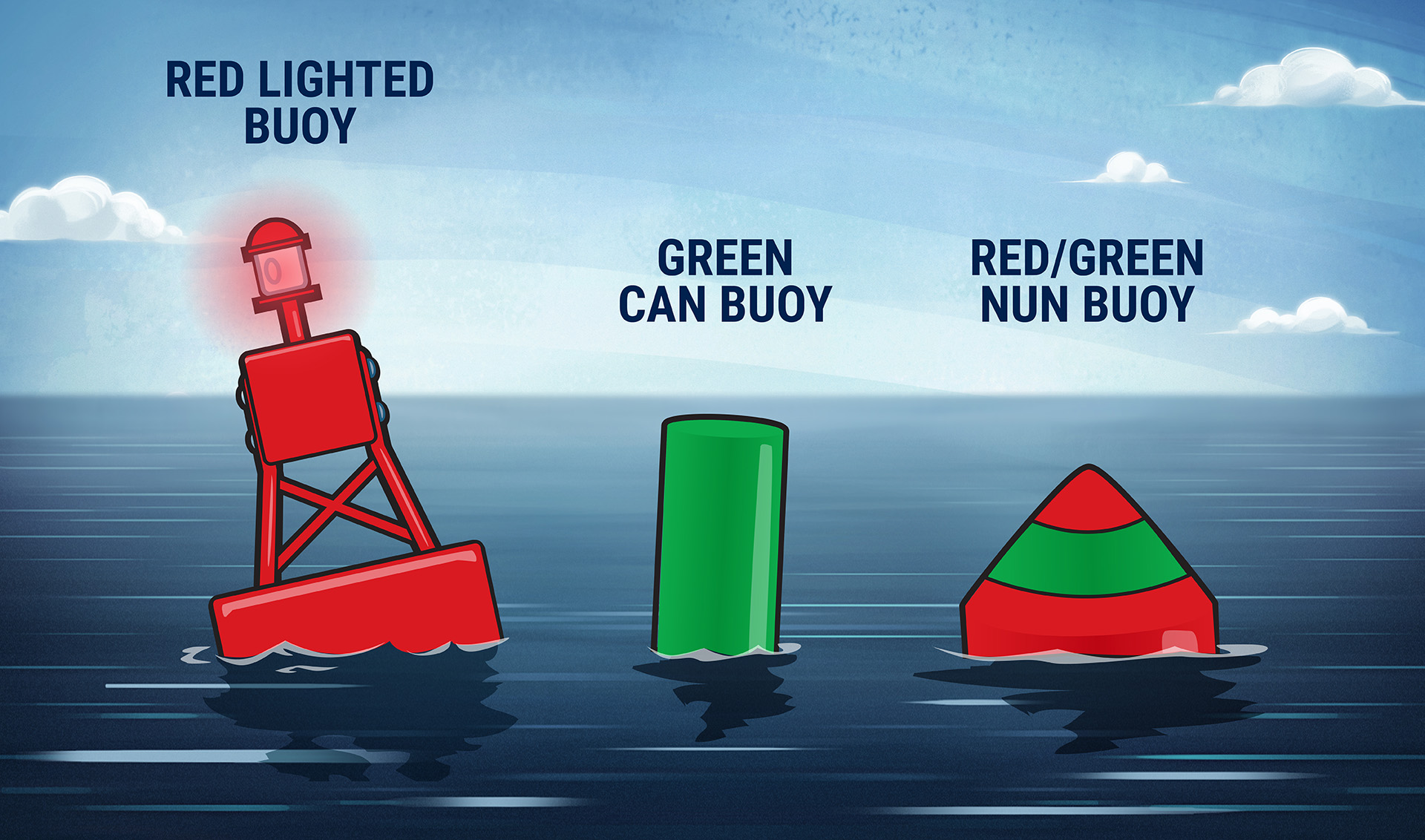
Color and Shape Codes
Two specific considerations for waterway buoys and markers are color and shape.
The colors you'll see most often are red and green. Using the IALA (International Association of Lighthouse Authorities) system for marking channels, these colors will keep you in the proper location for travel.
Another color you may see is yellow, which is used for special aids. These can include a variety of shapes and may signify anchoring, military exercise areas, traffic separation, jetties, fishnet areas, and cables or pipelines. They may carry a black letter and be solidly lit or blinking.
Shapes are essential, and you may see circular, cylindrical, conical, and other types of markers.
For example:
- Diamond-shaped dayboards are like the "you are here" you find on a map, and they help you determine your location
- Red and black horizontal bands indicate danger, but it's isolated, and you can pass it on either side
There are many boating navigation aids, all with different symbols and information. While learning them all can take a while, the knowledge will help you stay safe when navigating your vessel.

Types of Buoys and Markers
Lateral markers define channel boundaries and provide directional guidance.
Generally, when heading upstream or to inland water from open water, you'll want red markers on your right and green on your left. This is where the mnemonic "Red Right Returning" comes from, as you want the red marker on your right (starboard) side when returning to the dock/shore.
Additionally, keep an eye out for:
- Special-purpose buoys that provide specific information or warnings for that location. These can include mooring buoys and swim area markers.
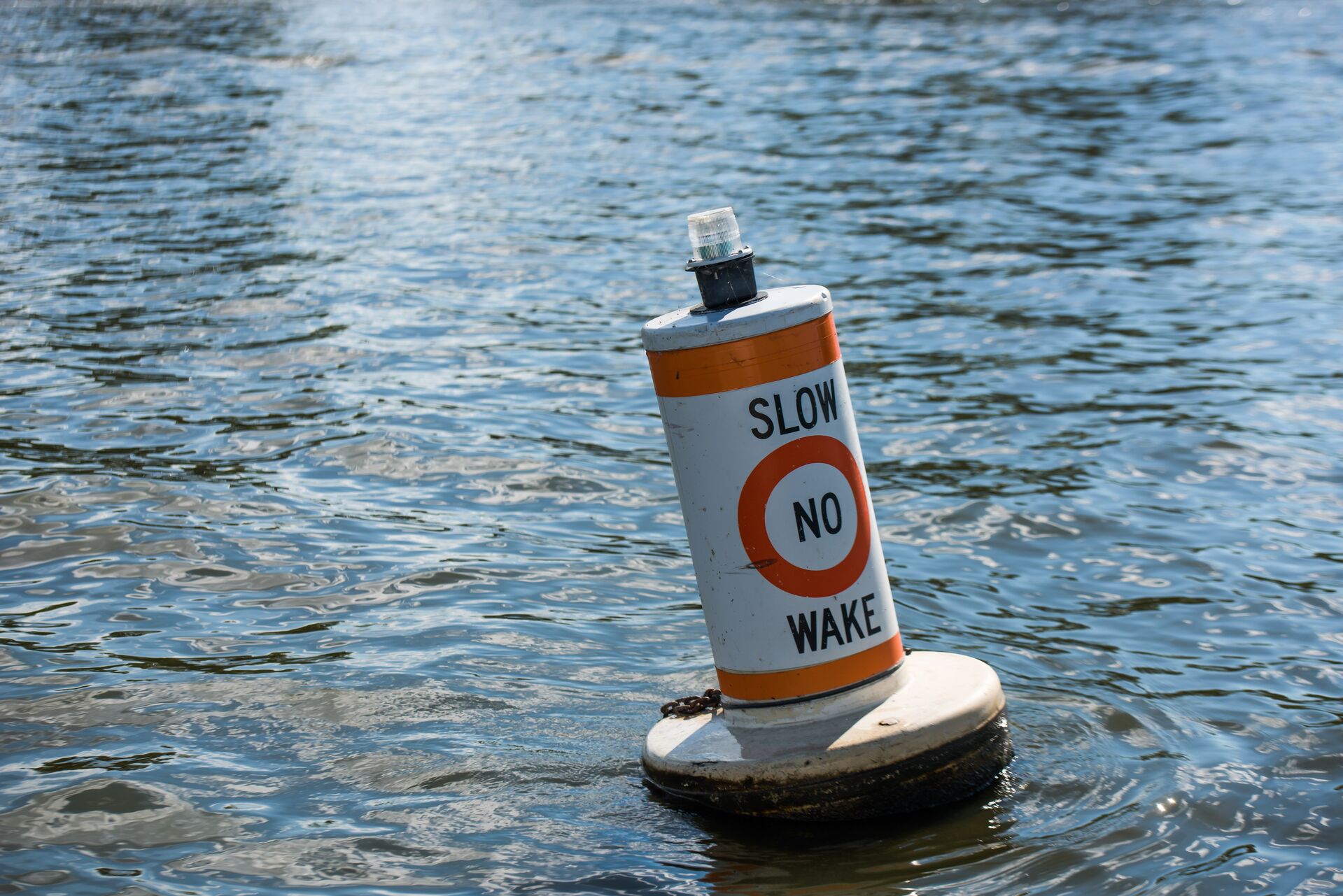
- Regulatory markers for speed limits or no-wake zones
- Hazard markers that define danger, such as underwater obstacles or shallow areas.
Safe water markers are also prevalent when looking for boat signs on the water. These are spherical buoys or pillars marking safe water, and you'll generally find them in the center of a channel. They have white and red vertical stripes.
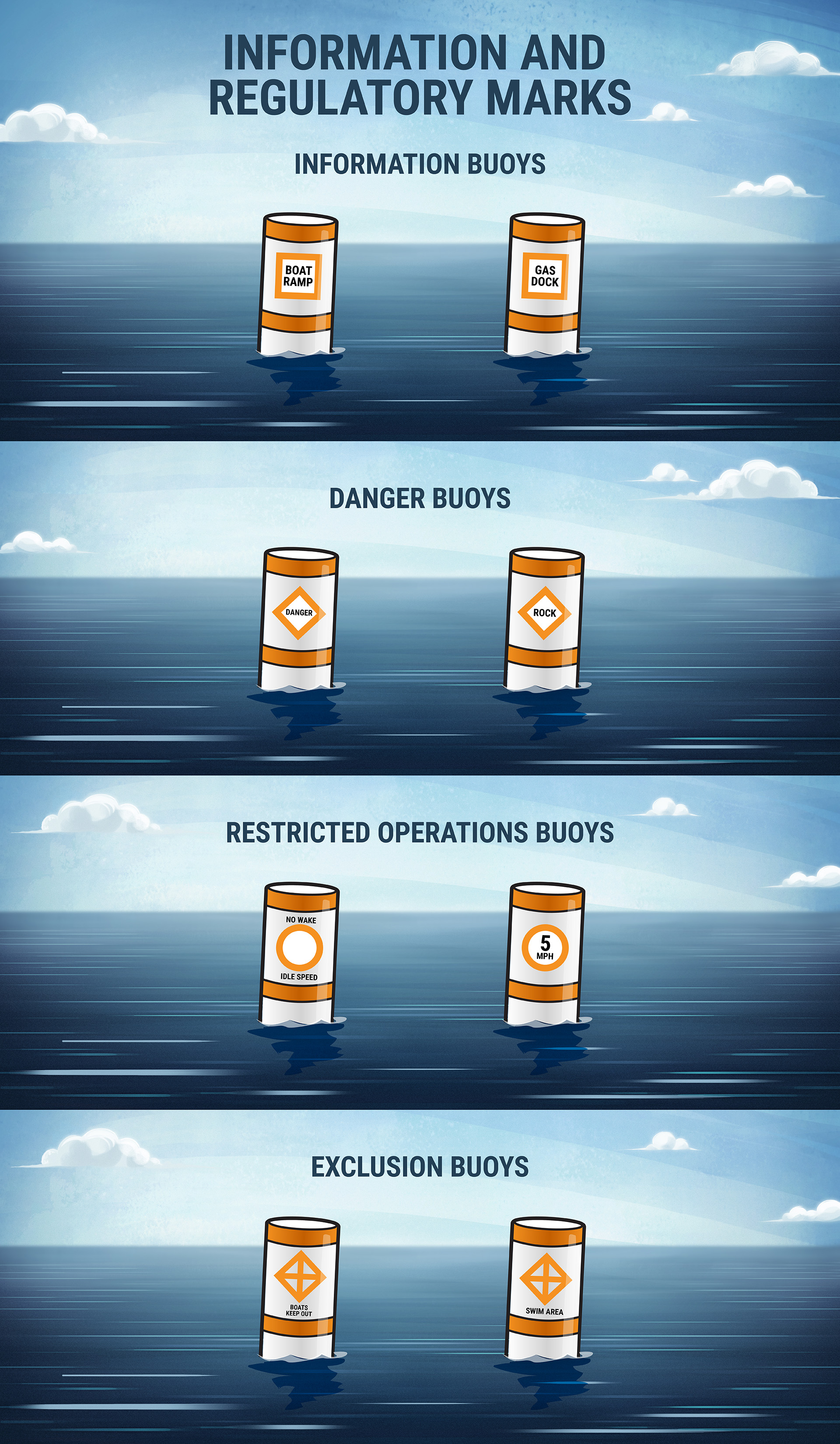
Navigating with Channel Markers
Learning about navigation is one of the most vital aspects of boating, as making a mistake in this area could cause a collision or other serious accident.
Channel markers are positioned to mark the path for safe navigation.
Follow them to avoid running your boat aground or colliding with submerged hazards.
Understand Marker Placement and Local Variations
It's essential to note that the placement of waterway buoys can vary regionally, depending on whether the IALA system or the U.S. system is used. Boaters should familiarize themselves with local regulations and ensure they are aware of the system in use in that area.
Markers may differ based on local water conditions, hazards, or boating zones, and you don't want to be caught unaware due to a difference in buoy design, color, or usage. The more you know about both types of buoy and marker systems, the safer you'll be on your boat.
It's also good to get comfortable reading navigational charts for increased access to information.
What About Additional Markers?
Sometimes, you'll notice a different flag or shape displayed on a marker, just for a period of time. These flags are significant and can indicate specific conditions such as fog, slow-speed zones, or restricted areas.
If you see one of these additional markers, make sure you know what it's referencing so you can make safe boating choices.

Learn More About Boat Signs on the Water and Safety with ilearntoboat
Knowing how to interpret waterway buoys and markers is essential to vessel travel. To protect yourself and others while boating, you should always stay informed and respect the navigation rules indicated by these crucial water signs.
Ready to get out on the water and enjoy yourself? Before you do, take a boater education course through ilearntoboat.
You'll learn about buoys, markers, boating etiquette, and other valuable information so that you can make your time on the water fun and safe. Plus, our courses meet your state's requirements for boater education.
So, before your next launch, take the ilearntoboat course for your state!